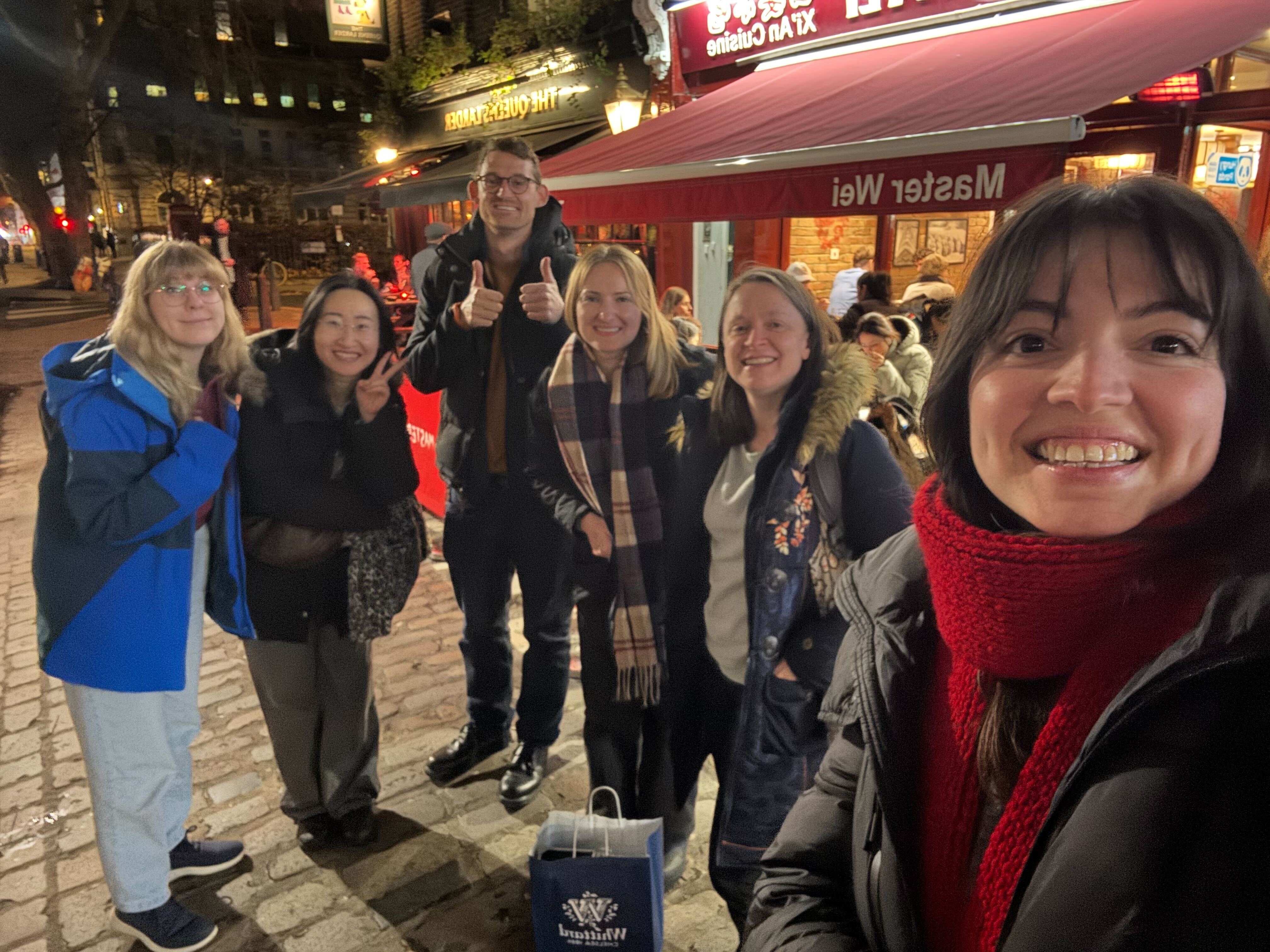
As the (2026-27) academic year began at UCL, we were joined by new lab members. Welcome to PhD students Bethany Blair and Yael Caspi, part-time Research Assistant Erin Lim, also to Sara Nicotra who is returning for a second 6-month PhD placement, and to Chiara Marraffa as a visiting PhD student. New Masters students are arriving in the lab too. Lots of new ideas, so look out for updates on the Projects page.
Congratulations to Nevin Ozden who on Thursday 1 May 2025, presented her poster “Beyond the Here and Now: Theory of Mind, Episodic Memory, Episodic Future Thinking”, at INSAR 2025, the International Society for Autism Research conference. Nevin’s poster explores how autistic and non-autistic people think about themselves in terms of both their personalities (psychological traits, like being “happy” or “clumsy”) and their physical traits (like being “tall” or “bald”) and how these change over time.
Congratulations to Ceci Qing Cai who has been awarded the 2025 Neil O’Connor Prize for her publication titled “Mapping the Differential Impact of Spontaneous and Conversational Laughter on Brain and Mind: An fMRI Study in Autism.” Awarded through the Developmental Psychology Section of the British Psychological Society (BPS), the Neil O’Connor Prize is given to those who have published research on cognitive conditions that appear in development and persist throughout life.
Ceci wishes to express her heartfelt thanks to Sophie K Scott, Sarah J White, Sam J Gilbert, Nadine Lavan, and the many dedicated students who supported this work! Special appreciation also goes to the incredible staff at ICN and BUCNI, whose efforts made it possible to carry out testing during the challenging times of the COVID pandemic. Deepest thanks are also extended to the autistic and non-autistic participants, whose time, trust, and insights made this research possible. Thank you!
We are sad to see Gillian Hughes leave the lab and thank her for all her hard work, including fulfilling her role as Autism Research Coordinator for Autism@ICN from 2024-2025. We wish her well in her future endeavours!
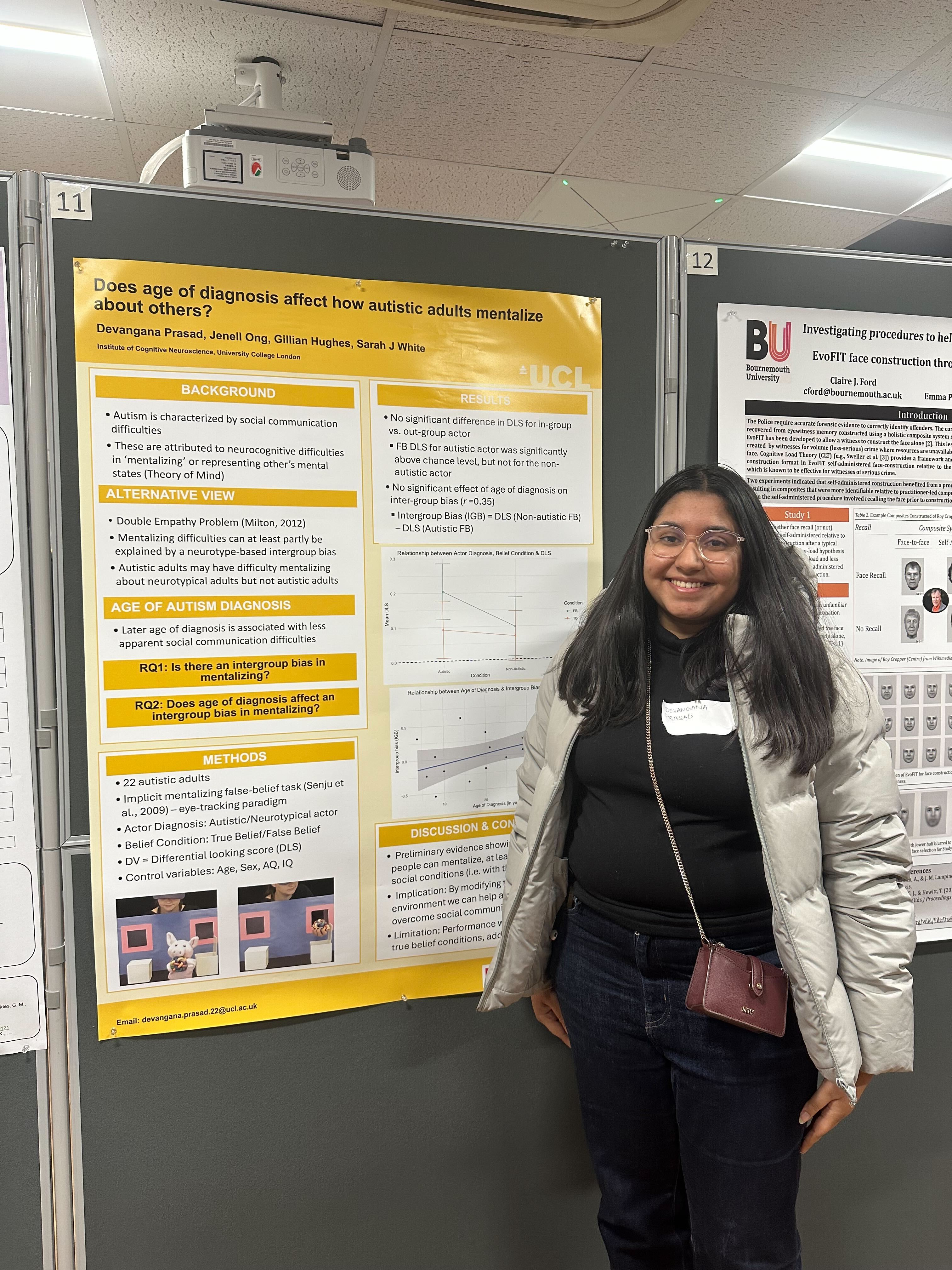
Congratulations to Devangana Prasad for presenting her poster titled “Does age of diagnosis affect how autistic adults mentalize about others?” at the 2025 Experimental Psychology Society (EPS) Poster Session on Wednesday 8 January 2025. Her poster explores whether the age at which autistic individuals are diagnosed affects how they mentalize about other autistic and non-autistic people.
View presentation: YouTube video – Devangana Prasad.
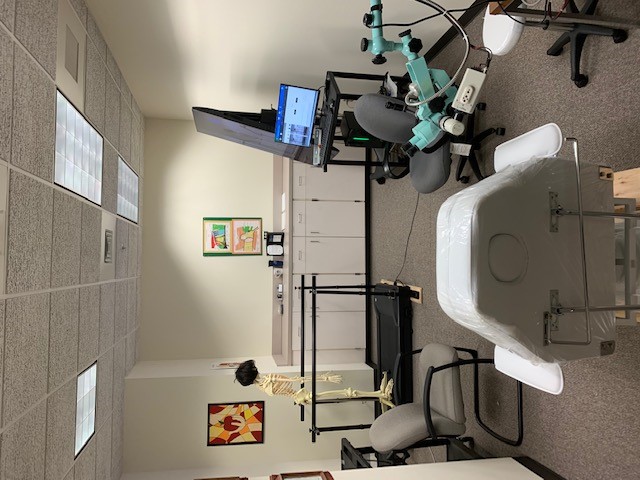
On October 18 2024, David Ruttenberg, a Fulbright Specialist Awardee and PhD Research Scientist from University College London, delivered a lecture at Florida Atlantic University’s Hearing Tinnitus Balance Research Laboratory (HTBRL). Drawing from his research in cognitive neuroscience and multimodal learning analytics, David explored the intricate relationships between sound sensory processing, attention, and neurodiversity. He shared insights from his recent work on sensitivity, distractibility, and mental health accommodations for both neurotypical and neurodiverse individuals. Leveraging his personal experience as a parent of an autistic adults and his academic expertise, David discussed how sensory sensitivities can impact learning, employment, social interactions, and overall quality of life. The lecture concluded with an engaging Q&A session, where attendees—comprising Masters and PhD students—had the opportunity to delve deeper into David’s initiatives and approach to understanding cognitive diversity.
During 25-26 October 2024, Sarah White attended the first conference in Italy on Autism in Action. The conference, titled “The Role of Executive Functions in Neurodiversity”, focused on the role of executive functions in the autism spectrum, from theory to practice, and from early intervention to empowerment in adults. Sarah delivered a keynote lecture titled “The Social Mind: How Do Executive Function & Mentalizing Interact in Autism?” to an audience of over 100 professionals, researchers, and students.
Sarah White was recently invited to participate in a networking event titled “Unlock Your Career Roadmap”, held by In2scienceUK in collaboration with the Royal Society. This event was aimed at connecting young students and encouraging them to discuss their career aspirations and inspire them to pursue research careers in STEM. The event featured poster presentations by students from the In2scienceUK university summer student placements program, which is dedicated to improving social mobility and diversity in STEM.
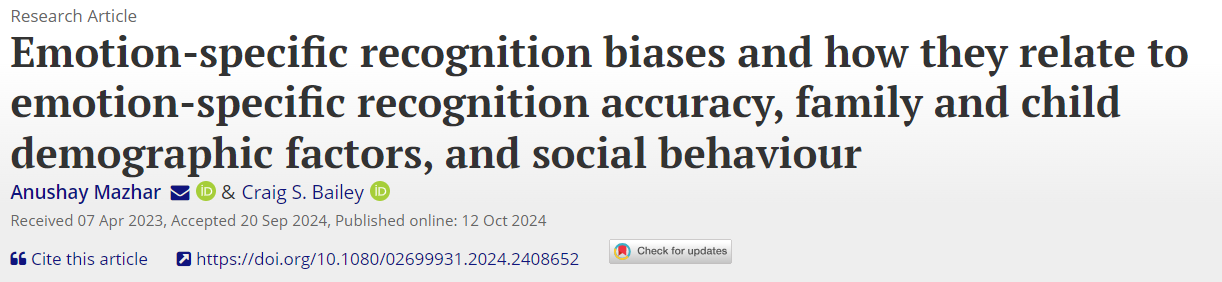
Congratulations to Anushay Mazhar on her first published paper on children’s emotion recognition biases. This work involved an MRes thesis that Anushay completed at Yale, investigating how preschool-aged children recognise emotions, focusing on systematic biases in their responses. Notably, children tended to over-identify with anger and sadness, while happiness was the most accurately recognised. The study shows that in general, older children were more accurate and less biased in their emotion recognition, but that biases were not strongly associated with social behaviour. These findings suggest that children’s emotional recognition errors may be systematic, highlighting the need for further research into the cognitive processes involved. It also emphasises the importance of paying attention to children’s mistakes as they could provide insight into their cognitive processes.
Congratulations to Katherine Ellis for receiving a grant to co-PI a project with Jo Moss aimed at further developing their teacher training e-resource! (https://www.findteacherresources.co.uk/) The e-resource provides condensed and accessible evidence-based information for education practitioners supporting children with genetic syndromes and intellectual disability. The project will focus on establishing an expert panel review of the resource’s scientific content as well as conducting a feasibility study to assess the impact of the resource on education practitioners’ self-efficacy and practices in supporting children with genetic syndromes and intellectual disabilities.